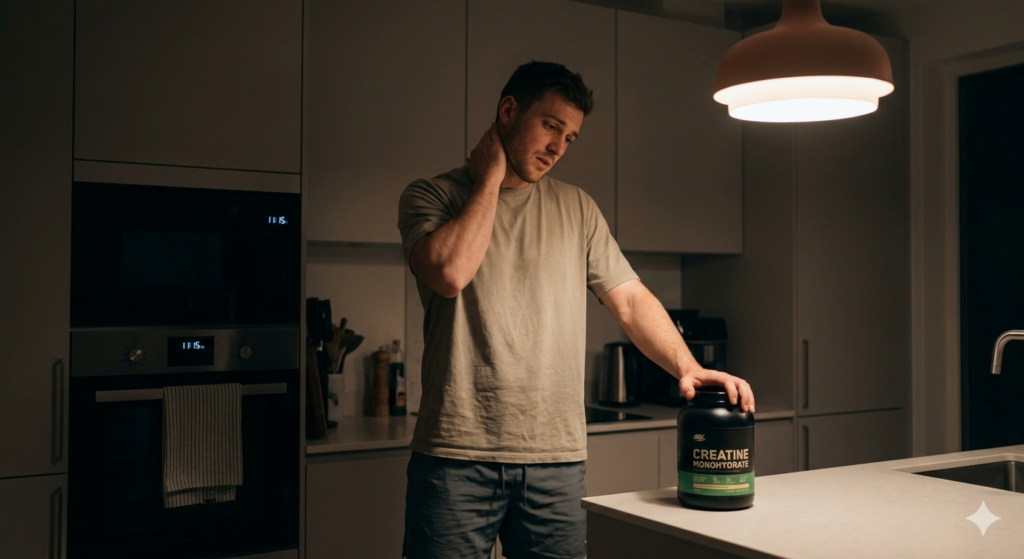
It’s 10:30 PM. You’re exhausted from a crushing leg day and a relentless day at the office. You’re standardizing your nightly wind-down routine—brushing teeth, setting the alarm—when your eyes lock onto the familiar tub of creatine monohydrate sitting on the kitchen counter.
You realize you missed your scoop today.
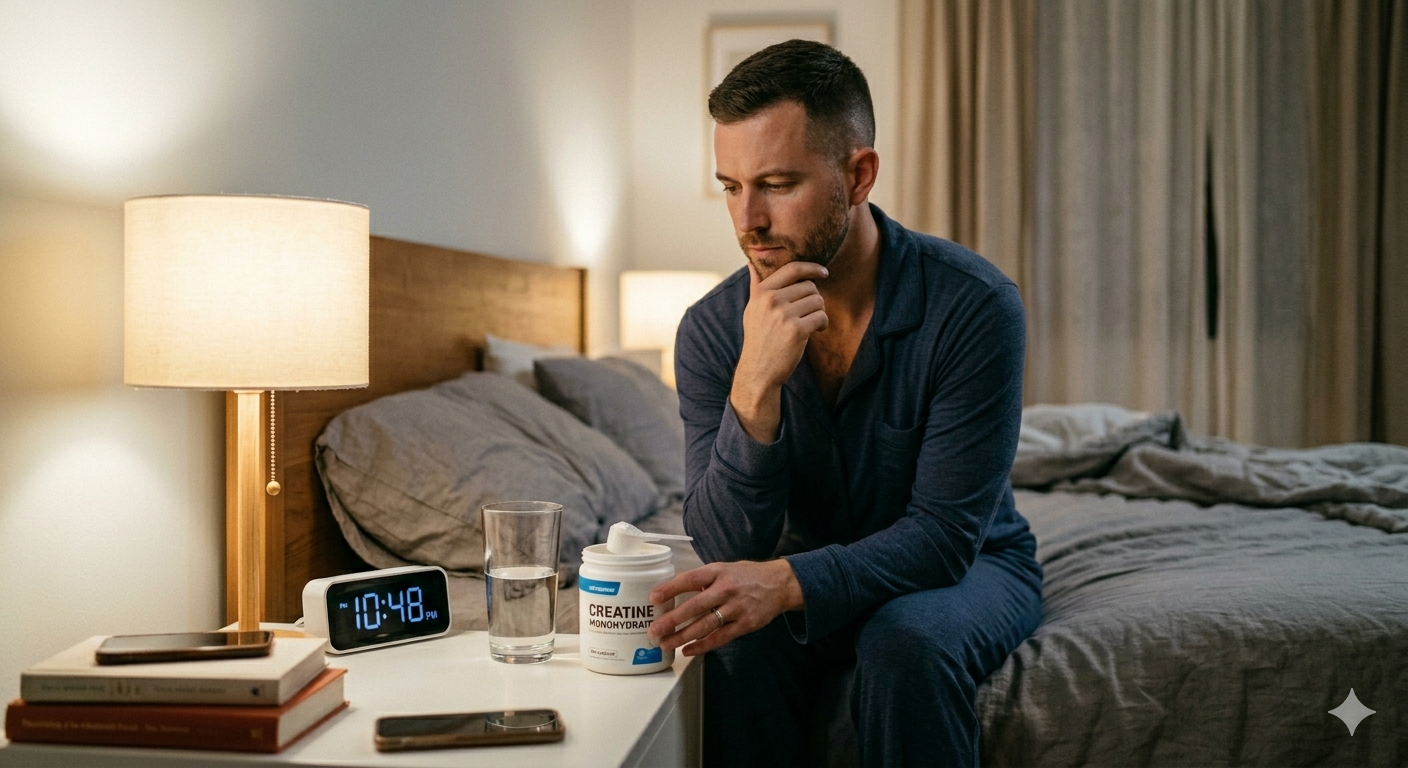
A mental tug-of-war ensues (just like the scene in Image 0). You know consistency is king for muscle saturation and maximizing creatine monohydrate benefits. But another voice, perhaps fueled by half-remembered forum posts, whispers a doubt: Will this keep me up all night? Will I ruin my deep sleep and tank my recovery?
You stand there, staring at the powder, weighing the “gains” against the potential for a restless, frustrating night. It’s a classic dilemma for fitness enthusiasts and busy professionals alike who take their sleep as seriously as their squats.
Well, step away from the counter and relax. As someone who has spent over a decade analyzing sports supplements and guiding clients through their nutrition strategy, I’m here to tell you that the answer isn’t a simple “yes” or “no.” The truth about creatine before bed is rooted in science, not speculation. Let’s cut through the noise and figure out exactly what happens when you take creatine late at night.
The Scientific Breakdown: How Creatine Actually Works
To understand if nighttime supplementation is a bad idea, we first need to understand what creatine is not.
Creatine is not a stimulant. It has nothing in common with caffeine, beta-alanine, or the myriad of ingredients found in pre-workouts that send your heart rate skyrocketing.
It’s About Saturation, Not Timing
When you ingest creatine, your body converts it into phosphocreatine, which is stored in your muscles. This phosphocreatine is crucial for regenerating Adenosine Triphosphate (ATP), the primary energy currency of your cells, especially during short, intense bursts of activity (like lifting or sprinting).
Unlike a pre-workout, which gives you a transient “buzz,” creatine works on the principle of long-term muscle saturation. Your goal is to keep these phosphocreatine stores full. Once they are full, the specific timing of your daily maintenance dose (usually 3-5 grams) becomes far less critical. Your muscles won’t “use” the creatine you just took in your sleep; they are simply topping up the reserves.
This is the foundational argument: creatine before bed is acceptable because your body is focusing on total cellular storage, not immediate energy release.
Creatine and Sleep Quality: Addressing the Myths
The biggest fear associated with late-night creatine is its potential impact on sleep quality. Let’s tackle this head-on.
Myth #1: Does Creatine Have Caffeine?
Let’s address the most common misconception. In its pure form, creatine monohydrate benefits include increased power, endurance, and cell volumization, but it does not have caffeine. If your “creatine” is part of a complex “nighttime recovery” formula, you must check the label. However, pure creatine monohydrate is stimulant-free. It will not inherently “wake you up” or cause the jitters.
The Nuance: Creatine, Hydration, and Digestion
While creatine doesn’t stimulate the central nervous system, it does interact with your body’s fluid balance.
The real “sleep disruption” risk isn’t insomnia (as shown in image 1, peaceful sleep is possible); it’s the increased hydration causing a late-night bathroom run. This is a crucial consideration for sleep-conscious athletes focusing on muscle recovery at night. Deep sleep is when the body releases the most growth hormone, so anything that fragments that sleep is a potential problem.
Pros vs. Cons of Taking Creatine Before Bed
To help you decide what’s right for your lifestyle, let’s look at the evidence-based advantages and disadvantages of taking creatine before bed.
Pros: Why Nighttime Might Work For You
- Convenience and Habit Stacking: For busy professionals, your routine might already be packed in the morning. If you never forget your pre-bed supplements, adding creatine here can ensure consistency—the single most important factor for its effectiveness.
- Optimal Muscle Recovery at Night: During sleep, your body is in peak repair mode. Keeping phosphocreatine stores full throughout the night may theoretically support optimal cellular conditions for recovery.
- Stimulant-Free: It will not interfere with your ability to fall asleep, provided you aren’t over-consuming fluids alongside it.
Cons: The Potential Drawbacks
- Increased Nighttime Waking (Nocturia): This is the biggest drawback. To properly dissolve and utilize the creatine, you need water. Lying down shortly after increasing your fluid intake might trigger the need to use the bathroom, disrupting critical deep-sleep cycles.
- Minor Digestive Discomfort: Although rare with micronized formulas, some people may experience slight bloating or gas if they take the supplement and immediately lie down.
- Fluid Management Challenge: It requires you to be disciplined about your evening water intake to avoid disrupting your sleep.
Head-to-Head Comparison: Best Time to Take Creatine
If you’re still undecided on the best time to take creatine, this table contrasts the two most common approaches: Morning Ingestion vs. Nighttime Ingestion.
| Feature | Morning Ingestion | Nighttime (Pre-Bed) Ingestion |
| Consistency Potential | Excellent for structured mornings. Easy to miss if rushing. | Excellent for “habit stacking” with nightly routines. Highly consistent. |
| Digestion & Comfort | Less likely to cause issues as you are active afterward. | Higher potential for minor discomfort if lying down immediately. |
| Sleep Quality Impact | None. | Low risk of insomnia, but higher risk of nighttime waking for bathroom. |
| Muscle Saturation Efficiency | No evidence of difference; total daily dose is paramount. | No evidence of difference; total daily dose is paramount. |
| Caffeine/Stimulant Risk | N/A (assuming pure creatine). | N/A (must verify label of non-pure products). |
The Lifestyle Angle: Creatine and Modern Wellness
For athletes who prioritize clean-label wellness or follow specific diets like Keto, creatine monohydrate benefits are very appealing. Pure creatine monohydrate is incredibly “clean”—it is zero-calorie, zero-carb, and generally additive-free (always verify your brand, especially if it’s flavored).
It fits seamlessly into a low-carb lifestyle. The slight water weight it sometimes causes is intracellular (inside the muscle), not extracellular (bloating), meaning it contributes to a fuller muscular look, not a soft one. This clean profile makes it a highly attractive option regardless of whether you take it morning or night.
Expert “Pro-Tips” for Taking Creatine at Night
If your lifestyle dictates that nighttime is your best option, use these strategies to optimize the experience and protect your sleep (as visualized in image 2).
1. Master Your Fluid Timing
Do not chug a full bottle of water to get your creatine down 15 minutes before bed. Instead, aim to consume your creatine scoop 60–90 minutes before you intend to sleep. This gives your body time to process the fluid and (hopefully) allows for one last bathroom trip before you turn in. Drink just enough water to dissolve it, not an excessive amount.
2. Choose Micronized Creatine
Micronized creatine monohydrate has been milled into a much finer powder than standard creatine. This increases its surface area, allowing it to dissolve far more easily and completely in less water. It is also typically easier on the digestive system, reducing the risk of bloating before you lie down.
3. The Ultimate Rule: Prioritize Consistency Over Timing
The data is overwhelmingly clear: the most important variable is that you take it daily. Whether you take it in the morning, post-workout, or at night matters far less than simply achieving and maintaining muscle saturation. If nighttime is the only time you will remember to take it, then the answer is a resolute “Yes, take it at night.”
Frequently Asked Questions (FAQ)
Here are the most common questions I get from athletes about creatine timing and effectiveness.
Does creatine affect sleep?
Pure creatine monohydrate benefits do not include stimulating the nervous system, so it does not directly affect the brain’s ability to enter sleep. However, it requires fluid to digest, and taking too much liquid before bed can disrupt sleep due to increased bathroom trips.
Is creatine okay for people with kidney issues?
For healthy individuals with no pre-existing kidney conditions, multiple studies have confirmed that creatine supplementation is safe and does not damage the kidneys. However, if you have any diagnosed renal condition, you must consult your physician before starting any supplementation.
Will creatine make me look soft or bloated?
This is a common fear. Creatine causes intracellular water retention—it draws water into the muscle cell, which makes the muscle look fuller and harder. It does not cause extracellular water retention (water under the skin), which is what gives a “soft” or “bloated” look.
Final Thoughts and Your Routine
The truth about taking creatine before bed is that the risk of insomnia is non-existent, but the risk of fragmented sleep from bathroom runs is real.
My advice as a nutritionist? If you are disciplined enough to manage your water intake (using less water and taking it 90 minutes before sleep) and you use a micronized formula, nighttime supplementation is perfectly fine. It will ensure you meet the critical goal of daily consistency without sabotaging your sleep.
The best supplement timing is always the one you will stick to.